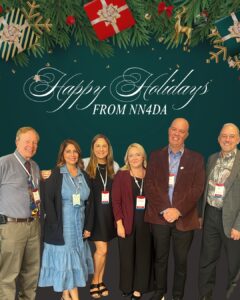
 NN4DA Holiday Wishes
Holiday greetings from the NN4DA to all our partners, local authorizers, and our supporters. We look forward to more great networking and collaboration in the new year!
_________________________________________________________________________________________________________________________
CCAP/NN4DA Release Study on California Charter School Authorizing
The California Charter Authorizing Professionals (CCAP), in collaboration with the National Network for District Authorizing (NN4DA), released a major study of charter school authorizing practices in California. The report was designed to inform California’s ongoing policy debates but it could be relevant in other states.
The Study, Strengthening California’s Charter School Sector: Updating California’s Charter School Authorizing Functions and Funding, describes effective authorizing practices, assesses the adequacy of fiscal and professional resources available to support these practices, evaluates the impact of California’s current oversight funding structure, and provides five overarching policy recommendations to address the state’s structural vulnerabilities.
The Study’s findings are based on an expansive literature review of historical and recent studies of California’s charter sector, a cross-state analysis of policies for charter authorizing, and the perspectives of many California authorizers who participated in interviews and focus groups.
The Study revealed weaknesses in California’s codified expectations of authorizers, the state’s system for funding and supporting authorizing, and the oversight tools available to authorizers. It offers recommendations to address each of the shortcomings.
Why People Outside California Should Read this Report
Of particular interest to authorizers elsewhere, the Study analyzes very large non classroom-based charter schools authorized by small districts. In California, these schools combine with the authorizing funding system to create problematic incentives, which are exacerbated by the state’s meager expectations for authorizers codified in law.
Small districts in California can receive a lot of money because of these schools. The state expects the money to go toward a district’s authorizing expenses. Like California, in many states with similar schools, this amount can be considerably more than it takes to oversee the school. Districts can use this funding for non-authorizing expenses, increasing their general budget. This dynamic can incentivize lax authorizing and attract problematic school operators.
In California, this approach contributed to scandals that involved hundreds of millions of dollars. That is why California has a sense of urgency to update their authorizing policies.
Small charter schools can also create challenges. California has 71 charter schools with fewer than 100 students and 245 schools with fewer than 200. Two thirds of the state’s authorizers oversee only one or two charter schools.
For authorizers of the small charter schools or portfolios, the state may provide inadequate resources to fund authorizing work. These can be very small authorizing shops.
Further challenging districts, many required authorizing activities take place before a charter school opens or after it closes. Without enrollment to generate funding, the work required to perform these tasks is entirely unfunded. Districts also lack funding to address events that dramatically increase authorizer work temporarily, like helping a struggling charter in crisis.
Too many states face a challenge similar to California.
One recommendation from the report is worth considering in many states. States could limit a district’s authorizer funding to a reasonable portion of the authorizer funding a large school generates. By capping the amount, they could remove incentives for small authorizers to lower standards when evaluating proposals or overseeing these schools.
Funds generated by the school that are over the cap could be redirected to a state fund. This fund could increase funding for authorizers of small schools or support other unfunded authorizing tasks, like managing closures. Funds could also be used to support technical assistance to the authorizers that need to improve, including support provided by NN4DA State Partners.
These changes could be enacted without costing a state a penny more than they currently spend.
NN4DA and CCAP will host a webinar on the report in January. We will explore the report and discuss its findings and recommendations with California authorizers.
We look forward to talks about ideas like this and many others in the new year.
I hope you will join us in all this work!